The reality
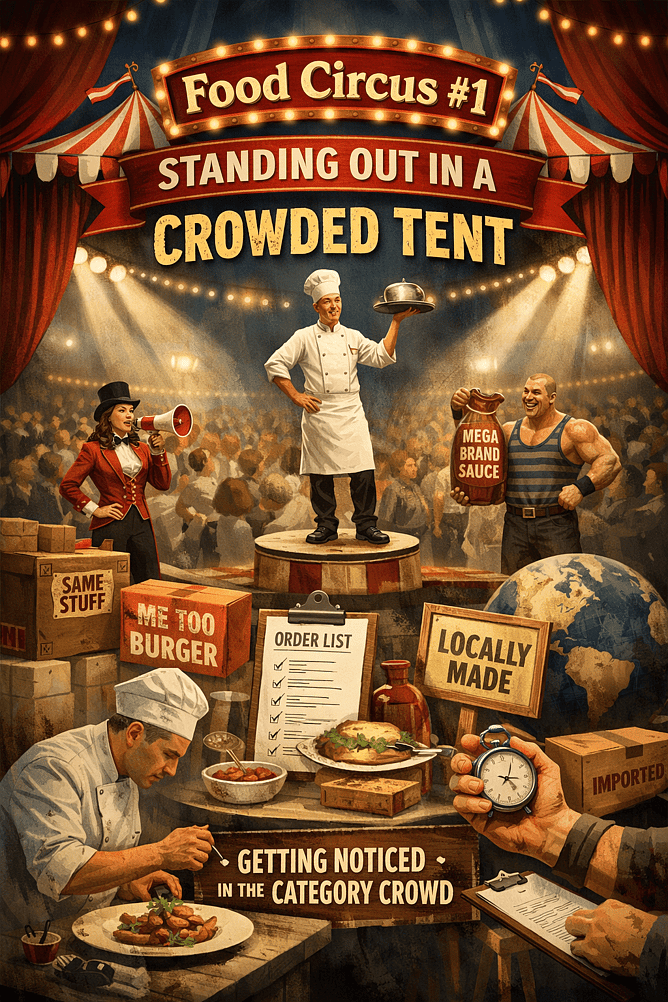
In foodservice, most categories are already full.
Not just full… crowded.
multiple Suppliers
similar products
overlapping claims
Distributors carrying near-identical ranges
From the outside, it looks like choice.
From the inside, it often feels like noise.
And for small to medium Suppliers?
Standing out can feel near impossible.
What actually works
1. Don’t try to win the whole category
Win a moment instead.
The biggest trap is trying to be:
“a better version of what already exists”
That’s a hard game to win.
The Suppliers that break through do something different.
They focus on:
a specific use case
a specific menu moment
a specific pressure point in service
The mind shift looks like this:
“Aioli that holds in a loaded burger during peak service without splitting”
Not
“Premium aioli for Foodservice”
That level of clarity cuts through.
Because now it’s not a product…
It’s a solution to a moment that matters.
2. Solve an Operator problem (not a product gap)
Operators don’t think in categories.
They think in problems.
consistency
speed
labour
menu margin
waste
training new staff
If a product doesn’t help with one of those…
It doesn’t stick.
The products that win tend to:
remove a step
reduce variation
make it easier for staff to get right every time
bring their customers back over and over again
That’s what drives repeat orders.
Not the pitch.
Not the brochure.
Not even the first trial.
Just… does it make life easier?
A quick reality check
Most categories don’t need another option.
They need:
fewer mistakes
faster execution
more consistency under pressure
That’s where smaller Suppliers can win.
Not by being bigger.
But by being sharper.
The SupplyIQ lens
This is where it often gets missed.
From the outside, categories look logical.
Structured. Comparable.
From the inside, they’re not.
They’re shaped by:
how Operators actually use product
what works under pressure
what quietly gets replaced
what keeps getting reordered
That’s where the real signals sit.
And that’s where the opportunity is.